
Proven Mortgage for Expats in Dubai: Easy 2026 Guide
A friend of mine moved to Dubai from London about a year ago. Earns AED 25,000 a month working in tech. Called me one evening and said, “I’ve been renting in JVC for six months and I’m basically throwing away AED 70,000 a year. Can I even get a mortgage for expats in Dubai?”
📋 Table of Contents
- Can Expats Get a Mortgage in Dubai?
- Mortgage Requirements for Expats in Dubai
- For Salaried Employees
- For Self-Employed and Business Owners
- For Non-Residents (No UAE Visa)
- How Much Can You Actually Borrow?
- The Debt Burden Ratio (DBR) Rule
- LTV (Loan to Value) Rules
- Worked Example: What Can You Actually Afford?
- Dubai Mortgage Rates in 2026: Fixed vs Variable
- Current Rate Ranges
- What is EIBOR?
- When to Choose Fixed
- When to Choose Variable
- The Salary Transfer Advantage
- Best Banks for Expat Mortgages in Dubai (2026)
- Islamic vs Conventional Mortgage for Expats in Dubai
- Conventional Mortgage
- Islamic Home Finance
- So Which Costs More?
- Real Monthly Payment Examples
- 5 Costly Mistakes Expats Make with Dubai Mortgages
- Mistake 1: House Hunting Before Getting Pre-Approved
- Mistake 2: Ignoring the Salary Transfer Benefit
- Mistake 3: Choosing the Wrong Rate Type
- Mistake 4: Forgetting to Budget for Closing Costs
- Mistake 5: Not Knowing the Early Settlement Rules
- What Happens to Your Mortgage If You Leave the UAE
- Frequently Asked Questions
- Your Next Steps
Two months later, he closed on a two bedroom apartment in JVC for AED 950,000. Put down 20%, got a fixed rate of 4.25% from Emirates NBD, and his monthly payment came out to AED 4,230. Less than his rent was.
The point is this: getting a mortgage for expats in Dubai is not only possible, it’s remarkably straightforward if you understand the rules. But the rules are different from back home, and there are a few traps that catch people off guard. This guide covers everything you need to know for 2026.
Can Expats Get a Mortgage in Dubai?
Short answer: yes. Securing a mortgage for expats in Dubai is actually easier than you might think.
Dubai’s banking sector has been lending to expatriates for over two decades. The UAE Central Bank has clear, well-regulated guidelines for mortgage lending, and most major banks in the country have dedicated products designed specifically for foreign nationals.
You don’t need to be a UAE citizen. You don’t need to have lived here for years. In fact, you don’t even need a UAE residency visa. Non-residents living abroad can also get approved for a mortgage for expats in Dubai, though the terms are stricter.
Compared to markets like the UK, where mortgage approval can take months of back and forth with surveyors and solicitors, or the US, where your credit score from twenty years ago still haunts you, Dubai is refreshingly direct when processing a mortgage for expats in Dubai. Banks here focus on three things: your income, your existing debts, and your down payment. Get those right and you’re most of the way there.
If you’re still figuring out the broader buying process, start with our complete guide to buying property in Dubai before getting into the mortgage specifics.
Mortgage Requirements for Expats in Dubai
For Salaried Employees
This is the most common scenario for those seeking a mortgage for expats in Dubai, and the banks have it down to a science.
Minimum salary: AED 10,000 to AED 15,000 per month depending on the bank. Most mainstream lenders sit at AED 15,000 as their cutoff, though a few like RAKBANK accept applicants from AED 10,000.
Employment stability: You need to have been in your current job for at least 6 months. Your probation period must be completed. Banks want to see that you’re settled, not someone who just arrived last week.
Documents you’ll need:
- Valid passport with UAE residency visa
- Emirates ID (front and back)
- Salary certificate from your employer (dated within 30 days)
- Payslips for the last 3 to 6 months
- Bank statements for the last 6 months showing salary credits
- Details of any existing debts (car loans, credit cards, personal loans)
For Self-Employed and Business Owners
If you run your own business and want a mortgage for expats in Dubai, the requirements are tighter.
Business history: Minimum 2 years of operations with an active trade license.
Financial proof: Audited financial statements for the last 2 years. Personal and company bank statements for the last 12 months. Some banks will also ask for a company profile or a memorandum of association.
Income calculation: Banks typically use your net profit divided by 12, not your revenue. So if your company made AED 600,000 in net profit last year, they’ll treat your monthly income as AED 50,000.
For Non-Residents (No UAE Visa)
Yes, you can get a mortgage for expats in Dubai without living in the UAE. But the terms are noticeably different.
Down payment: Expect to put down 35% to 50% of the property value, compared to 20% for residents.
LTV ratio: Banks typically offer 50% to 65% financing for non-residents, compared to 80% for residents.
Additional documents: Credit report from your home country, proof of address (utility bill or bank statement), and sometimes a letter from your employer abroad.
Bank availability: Not all banks lend to non-residents. HSBC, Emirates NBD, and Mashreq are among the most active in this space.
If you’re a non-resident looking into this, our guide on whether foreigners can buy property in Dubai covers the ownership side in detail.
How Much Can You Actually Borrow?
This is where most guides lose people. They throw around percentages but never show what those numbers actually mean for your specific salary. Let me fix that.
The Debt Burden Ratio (DBR) Rule
The UAE Central Bank caps your total monthly debt obligations at 50% of your gross monthly income. This includes your new mortgage payment, any existing car loans, personal loans, and credit card minimum payments.
LTV (Loan to Value) Rules
| Situation | Maximum LTV | Your Down Payment |
|---|---|---|
| Expat resident, first home under AED 5M | 80% | 20% |
| Expat resident, first home over AED 5M | 70% | 30% |
| Expat resident, 2nd/investment property | 60% | 40% |
| Non-resident buyer | 50% to 65% | 35% to 50% |
| Off-plan property (any buyer) | 50% | 50% |
Worked Example: What Can You Actually Afford?
Let’s say you earn AED 30,000 per month and have a car loan costing AED 2,500/month and a credit card minimum of AED 500/month.
Step 1: Maximum total debt = 50% of AED 30,000 = AED 15,000/month
Step 2: Subtract existing debts = AED 15,000 minus AED 3,000 = AED 12,000/month available for mortgage
Step 3: At 4.5% fixed rate over 25 years, AED 12,000/month gets you a loan of approximately AED 2,150,000
Step 4: With 80% LTV, that means you can buy a property worth up to approximately AED 2,690,000
Reality check: You’ll also need cash for the DLD fees and closing costs which add roughly 7% to 8% on top. So your true “all in” budget is closer to AED 2,500,000 for the property itself after accounting for those extra charges.
Dubai Mortgage Rates in 2026: Fixed vs Variable
Current Rate Ranges
| Rate Type | Range (2026) | How It Works |
|---|---|---|
| Fixed Rate | 3.99% to 5.80% | Locked for 1 to 5 years, then reverts to variable |
| Variable Rate | 5.00% to 8.00% | EIBOR + bank’s margin, fluctuates with market |
What is EIBOR?
When exploring options for a mortgage for expats in Dubai, remember that EIBOR stands for Emirates Interbank Offered Rate. It’s the benchmark rate that UAE banks use to set variable mortgage rates. Think of it like LIBOR in the UK or the Fed funds rate in the US.
Your variable rate is calculated as: EIBOR + bank’s fixed margin (typically 1.5% to 3.0%). When EIBOR goes up, your payment goes up. When it drops, your payment drops.
As of early 2026, the 3-month EIBOR sits around 4.8% to 5.2%.
When to Choose Fixed
Fixed makes sense if you want predictable payments and are worried about rates rising. It’s especially good if you’re on a tight budget where even a small increase in monthly payments would cause stress. The trade-off is that fixed rates are slightly higher than the initial variable rates.
When to Choose Variable
Variable can save you money if you believe rates will stay flat or drop over the coming years. It’s also worth considering if you plan to sell the property within 3 to 5 years, since you’ll benefit from the lower initial rate without being exposed to long-term fluctuations on your mortgage for expats in Dubai.
The Salary Transfer Advantage
Here’s something most guides barely mention. If you transfer your monthly salary directly to the bank giving you the mortgage, most banks will offer you a rate 0.25% to 0.50% lower than their standard rate. On a AED 1,500,000 loan over 25 years, that 0.50% difference saves you roughly AED 115,000 in total interest over the life of the loan. It’s free money. Always ask about this.
Best Banks for Expat Mortgages in Dubai (2026)

Here’s a side-by-side comparison that no other guide gives you for finding the best mortgage for expats in Dubai:
| Bank | Fixed Rate (From) | Min Salary | Max LTV (Expat) | Islamic Option | Best For |
|---|---|---|---|---|---|
| Emirates NBD | 3.99% | AED 15,000 | 80% | Yes | Digital-first buyers, salary transfer discounts |
| HSBC UAE | 4.15% | AED 15,000 | 80% | No | International expats, non-resident buyers |
| First Abu Dhabi Bank (FAB) | 4.09% | AED 10,000 | 80% | Yes | Competitive rates, lower salary threshold |
| Dubai Islamic Bank (DIB) | 4.25% | AED 15,000 | 80% | Yes (only) | Sharia-compliant financing |
| Mashreq Bank | 4.35% | AED 15,000 | 80% | Yes | Flexible terms, non-resident lending |
| RAKBANK | 4.49% | AED 10,000 | 80% | Yes | Lower salary requirement, smaller properties |
| ADCB | 4.19% | AED 15,000 | 80% | Yes | Dedicated relationship managers, large loans |
Note: Rates shown are starting fixed rates and may vary based on your profile, property type, and whether you opt for salary transfer. Always confirm directly with the bank.
My honest take: For most salaried expats, Emirates NBD and FAB tend to offer the most competitive packages when you factor in salary transfer benefits. If you’re a non-resident, HSBC is usually the most accommodating. And if you specifically want Islamic financing, DIB is hard to beat on both rate and service.
Islamic vs Conventional Mortgage for Expats in Dubai
This question comes up constantly when discussing a mortgage for expats in Dubai, so let me give you a straight answer.
Conventional Mortgage
The bank lends you money. You repay it with interest over the agreed term. Simple. The property is used as collateral. If you default, the bank can take possession.
Islamic Home Finance
Islamic banks can’t charge interest (riba). So they use alternative structures that achieve a similar outcome:
Murabaha (Cost Plus Financing): The bank buys the property, then sells it to you at a higher price with the profit margin built in. You pay this in installments. The “profit rate” functions similarly to an interest rate.
Ijara (Lease to Own): The bank buys the property and leases it to you. Your monthly payments include both the lease rental and a portion that goes toward eventual ownership. At the end of the term, the property transfers to you.
So Which Costs More?
Honestly, the difference is minimal. In 2026, Islamic profit rates and conventional interest rates are running within 0.1% to 0.3% of each other for most banks. The monthly payment on a AED 1,000,000 loan at 4.25% (conventional) vs 4.35% (Islamic) works out to a difference of roughly AED 50 per month. Hardly worth losing sleep over.
Where Islamic finance does have an edge is in legal protection during disputes. Under Islamic structures, the bank shares some of the property risk with you. In certain default scenarios, this can actually work in the borrower’s favor compared to conventional lending. It’s not a huge factor, but it’s worth knowing.
Real Monthly Payment Examples

This is what you actually want to see. Real numbers.
| Property Value | Down Payment (20%) | Loan Amount | Rate | Tenure | Monthly EMI | Total Interest Paid |
|---|---|---|---|---|---|---|
| AED 1,000,000 | AED 200,000 | AED 800,000 | 4.50% | 25 years | AED 4,450 | AED 535,000 |
| AED 2,000,000 | AED 400,000 | AED 1,600,000 | 4.50% | 25 years | AED 8,900 | AED 1,070,000 |
| AED 5,000,000 | AED 1,500,000 | AED 3,500,000 | 4.75% | 20 years | AED 22,650 | AED 1,936,000 |
Note: AED 5M property uses 70% LTV (30% down) and shorter tenure as banks typically cap high-value loans at 20 years.
The rental comparison that matters: That AED 1,000,000 apartment in JVC? It currently rents for about AED 55,000 to AED 65,000 per year, which is AED 4,580 to AED 5,420 per month. Your mortgage payment of AED 4,450 is literally cheaper than rent, and you’re building equity instead of padding your landlord’s retirement fund.
For the AED 2,000,000 property, remember this also qualifies you for the Golden Visa through property investment. So you’re not just buying a home. You’re securing long-term residency for your entire family.
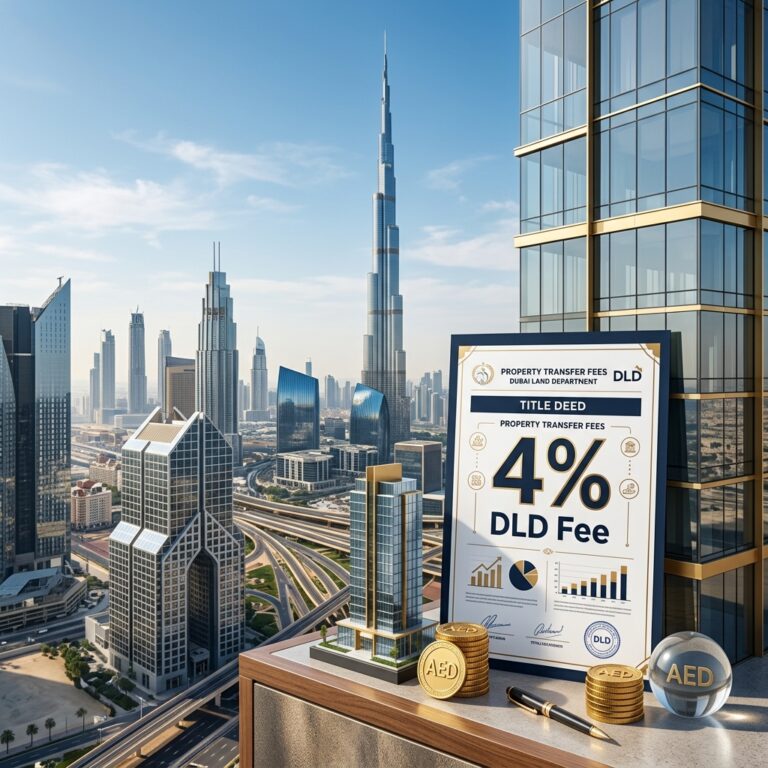
Don’t forget to add the closing costs on top. Our DLD fees breakdown shows exactly how much extra cash you need at the trustee office.
5 Costly Mistakes Expats Make with Dubai Mortgages
Mistake 1: House Hunting Before Getting Pre-Approved
I’ve watched this happen more times than I can count. Someone finds their dream apartment, puts down a 10% MOU deposit, and then discovers the bank won’t approve them for the amount they need. Now they’re scrambling to either find a co-borrower or lose their deposit. Pre-approval takes about a week. Do it first.
Mistake 2: Ignoring the Salary Transfer Benefit
A 0.25% to 0.50% rate reduction might sound small. On a AED 1,500,000 loan over 25 years, it saves you AED 60,000 to AED 115,000 in total interest on a mortgage for expats in Dubai. That’s a car. Ask every bank about their salary transfer discount before committing.
Mistake 3: Choosing the Wrong Rate Type
If you plan to hold the property for 15+ years, a fixed rate gives you peace of mind. If you’re planning to sell within 3 to 5 years, variable might save you money. Too many people choose fixed just because it feels safer without actually running the numbers for their timeline.
Mistake 4: Forgetting to Budget for Closing Costs
Your 20% down payment is not your total upfront cost. You also need 7% to 8% for DLD fees, agency commission, trustee charges, and bank processing fees. On a AED 1,000,000 property, that means you need roughly AED 270,000 to AED 280,000 in cash, not just AED 200,000.
Mistake 5: Not Knowing the Early Settlement Rules
If you want to pay off your mortgage early or refinance to a better rate, there is a penalty. But here’s the good news: the UAE Central Bank caps early settlement fees at 1% of the outstanding loan balance or AED 10,000, whichever is lower. That’s one of the most borrower-friendly early settlement caps in the world. Know this before you sign, because it opens up your options down the road.
What Happens to Your Mortgage If You Leave the UAE
This is the section nobody else writes, and it’s the question that keeps expats up at night when considering a mortgage for expats in Dubai.
Your mortgage doesn’t disappear if you leave the country. The bank still expects payment. The property is still in your name. Here’s what actually happens:
If you keep paying from abroad: Nothing changes. Most banks allow you to set up international transfers or maintain a UAE account that you fund remotely. As long as the payments arrive on time, the bank doesn’t care where you physically live.
If you want to sell: You can sell the property from abroad through a Power of Attorney. The sale proceeds pay off the remaining mortgage, and the difference goes to you. This is the cleanest exit.
If you stop paying: This is where it gets serious. Banks in the UAE hold a security cheque from you as part of the mortgage agreement. If you default, they can deposit that cheque, pursue legal action, and eventually repossess the property. Your credit rating in the UAE will be destroyed, which matters if you ever want to return.
The smart move: If you know you’re leaving the UAE, start the conversation with your bank 3 to 6 months before your departure. Explore refinancing, selling, or converting to a non-resident mortgage. The earlier you act, the more options you have.
Frequently Asked Questions
What is the minimum salary for a mortgage in Dubai?
Most banks require a minimum of AED 15,000 per month for salaried employees. A few banks like FAB and RAKBANK accept applications starting from AED 10,000 per month. Self-employed applicants typically need to demonstrate higher effective income through audited financials.
Can I get a mortgage without a UAE residency visa?
Yes. Non-residents can obtain mortgages in Dubai, though with stricter terms. Expect a larger down payment (35% to 50%), higher interest rates, and additional documentation including credit reports from your home country. HSBC, Emirates NBD, and Mashreq are among the banks that actively lend to non-residents.
How long does mortgage approval take in Dubai?
Pre-approval typically takes 3 to 5 business days. Full mortgage approval after you’ve found a property and submitted all documents takes about 2 to 4 weeks. The entire process from application to final disbursement usually runs 4 to 6 weeks total.
Can I pay off my Dubai mortgage early?
Yes. The UAE Central Bank caps early settlement penalties at 1% of the outstanding loan balance or AED 10,000, whichever is lower. This applies to both full and partial prepayments, making early settlement very cost-effective compared to most other countries when managing a mortgage for expats in Dubai.
Is it better to get a mortgage or pay cash in Dubai?
It depends on your financial goals. Cash purchase avoids interest costs and gives you a stronger negotiating position with sellers. Mortgage lets you keep capital free for other investments and can generate higher overall returns if the rental yield exceeds your mortgage rate. We break this down fully in our mortgage vs cash purchase comparison.
Your Next Steps
Getting a mortgage for expats in Dubai is not the intimidating process most people expect. The requirements are clear, the banks are competitive, and the rates are transparent. What trips people up isn’t the mortgage itself. It’s not being prepared.
Get your documents ready. Get pre-approved before you start viewing. Budget for the full cost, not just the down payment. And take five minutes to compare at least three banks before you commit.
If you want to understand the full cost picture beyond the mortgage, read our complete breakdown of DLD fees and closing costs. And if you’re ready to start the buying process, our step-by-step buying guide walks you through everything from first viewing to Title Deed.