How to Buy Property in Dubai in 2026: The Complete Step-by-Step Guide
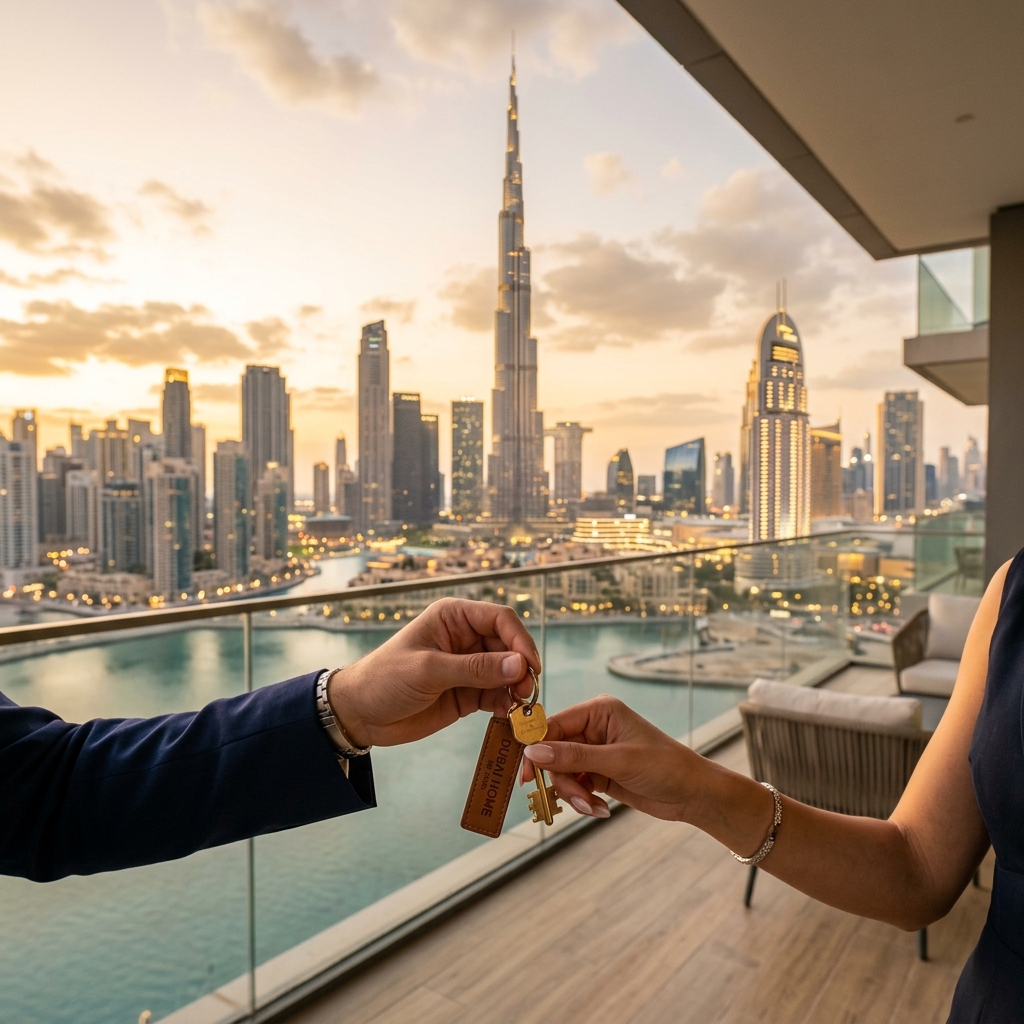
I remember the first time I seriously looked into buying property in Dubai. I spent three hours on Google and ended up more confused than when I started. Every article I found was either trying to sell me something or buried under legal jargon that made my head spin.
📋 Table of Contents
- Who Can Buy Property in Dubai?
- Freehold vs Leasehold: What Does It Actually Mean?
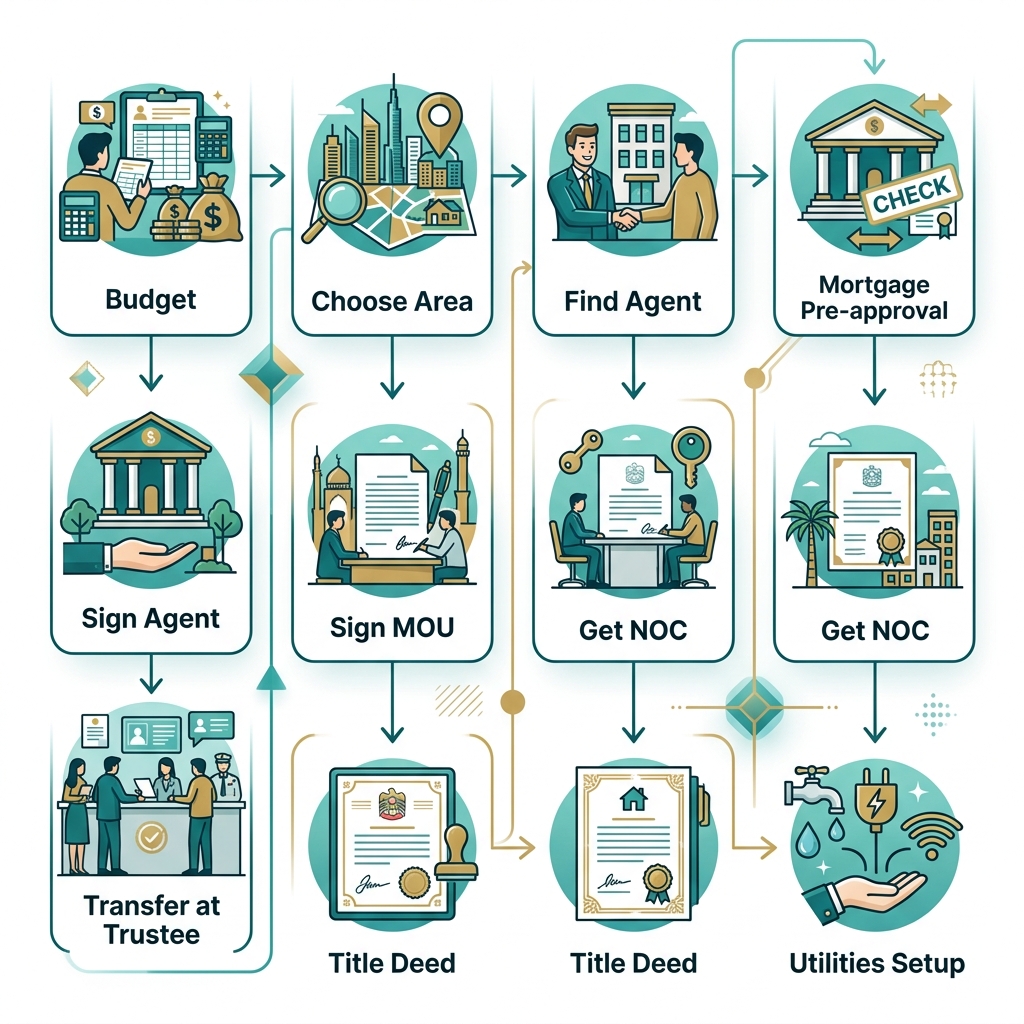
- How to Buy Property in Dubai: The 9 Steps
- Step 1: Get Clear on Your Budget
- Step 2: Choose the Right Area for Your Goals
- Step 3: Find a Licensed Real Estate Agent
- Step 4: Get Your Mortgage Pre Approved
- Step 5: Make Your Offer and Sign the MOU
- Step 6: The Seller Obtains a No Objection Certificate
- Step 7: Complete the Transfer at the Trustee Office
- Step 8: Receive Your Title Deed
- Step 9: Set Up Utilities and Manage Your Property
- Complete Breakdown of Property Buying Fees in Dubai (2026)
- Should You Pay Cash or Get a Mortgage in Dubai?
- 6 Costly Mistakes That First Time Buyers Make in Dubai
- Frequently Asked Questions About Buying Property in Dubai
- How long does the property buying process take in Dubai?
- Can I buy property in Dubai without being there in person?
- Does buying property in Dubai give me a residency visa?
- What is the cheapest property I can buy in Dubai?
- Is Dubai property still a good investment in 2026?
- Where Do You Go From Here?
DLD. NOC. SPA. RERA. Form F. Trustee office. It felt like everyone in this industry speaks a language designed to keep normal people out.
That experience is exactly why I wrote this guide. If you’re thinking about buying a home or an investment property in Dubai, you deserve a straight answer. Not a sales pitch. Not a copy paste from a government website. Just a clear, honest walkthrough of how the whole thing actually works in 2026.
Whether you’re an expat living here, a non-resident investor looking from abroad, or someone who’s been renting for years and finally decided to make the jump, this guide covers it all.
Who Can Buy Property in Dubai?
This is usually the first question people ask, and the answer is simpler than most expect.
Pretty much anyone can buy property in Dubai. The government opened foreign ownership back in 2002 and since then, buyers from over 200 nationalities have purchased homes here. You don’t need a UAE visa. You don’t need to be a resident. You don’t even technically need to be in the country to close the deal, although I’d strongly suggest visiting at least once before handing over your money.
There is one important rule though. Foreigners can only purchase in designated freehold areas. The good news is that most of the popular communities fall into this category. We’re talking about Dubai Marina, Downtown Dubai, JVC, Palm Jumeirah, Business Bay, Dubai Hills Estate, and plenty more.
If you hold a UAE or GCC passport, this restriction doesn’t apply to you. You can buy anywhere in the emirate.
Freehold vs Leasehold: What Does It Actually Mean?
This one confuses a lot of first time buyers, so let me keep it simple.
Freehold means you own the property and the land it sits on. Completely. Forever. You can sell it whenever you want, rent it out, renovate it, or pass it down to your kids. It’s yours in every sense of the word.
Leasehold means you get the right to use a property for a fixed period, usually 99 years, but you don’t own the land beneath it. Think of it as a very, very long rental contract.
For international buyers, I always recommend going freehold. It’s cleaner, your rights are stronger, and if the property hits AED 2 million or more in value, it can also qualify you for a 10 year Golden Visa. That’s a pretty big bonus on top of the investment itself.
How to Buy Property in Dubai: The 9 Steps
Alright, this is the part you really came here for. I’m going to walk you through every step of the process, in the exact order it happens. No skipping, no fluff.
Step 1: Get Clear on Your Budget
I know this sounds obvious, but you’d be surprised how many people skip this step. They see a nice apartment listed at AED 1 million and think that’s what they need in their bank account. It’s not.
On top of the purchase price, you need to account for:
- 4% DLD transfer fee (this is the big one)
- 2% agency commission plus 5% VAT on that
- AED 4,000 plus VAT for the trustee office
- Mortgage fees if you’re financing (valuation, arrangement, registration)
When you add everything up, your real cost is about 7% to 8% above the listed price. So that AED 1 million apartment? Budget for AED 1,070,000 to AED 1,080,000 to be safe.
Getting this number right from the start saves you from that awful moment where you’re scrambling for extra cash right before closing.
Step 2: Choose the Right Area for Your Goals
Dubai is massive and every neighborhood has a completely different personality. What works for a young professional is totally wrong for a family with three kids, and what makes sense as an investment might be a terrible place to actually live.
Here’s how I usually think about it:
- Buying for rental income? Focus on yield. Areas like Jumeirah Village Circle and Dubai Silicon Oasis are consistently delivering 7% to 9% gross returns right now.
- Buying to live in? Think about your daily life. Where’s your office? Where will the kids go to school? How far is the nearest supermarket?
- Buying for a Golden Visa? Your property or portfolio needs to be worth at least AED 2 million at current market valuation.
- Buying for holiday home income? You want tourist heavy locations. Dubai Marina and Downtown Dubai are the obvious picks.
If you’re still unsure which neighborhood fits your situation, we’ve put together detailed area guides that cover the honest pros and cons of each community.
Step 3: Find a Licensed Real Estate Agent
Let me be blunt here. Do not work with an unlicensed agent. I’ve heard too many horror stories from people who went with someone a friend recommended, only to find out that person wasn’t even registered with RERA.
Every legitimate real estate agent in Dubai carries a RERA broker card. You can verify it through the Dubai REST app or directly on the DLD website. If they hesitate when you ask to see it, that tells you everything you need to know. Walk away.
For off plan purchases, you can sometimes buy directly from the developer. But for resale properties, a good agent is worth every dirham of their commission.
Step 4: Get Your Mortgage Pre Approved
If you plan to finance your purchase, do this before you start making offers. Not after. I’ve watched people fall in love with a property, put down a deposit, and then find out the bank won’t approve them for the amount they need. That’s a painful and expensive mistake.
A pre approval letter from the bank does two things. First, it tells you your exact budget so you don’t waste time looking at properties you can’t afford. Second, it shows sellers that you’re a serious buyer, which can actually give you an edge in negotiations.
Most banks in the UAE will lend expat residents up to 80% of the property value for a first home priced up to AED 5 million. If you’re a non-resident, expect a lower ratio, usually around 50% to 60%.
Step 5: Make Your Offer and Sign the MOU
Once you’ve found the property you want, your agent will handle the negotiation with the seller. When both sides agree on a price, you sign what’s called a Memorandum of Understanding, or MOU. In Dubai, the official version is called Form F.
This is a legally binding document that spells out the agreed price, the payment timeline, any conditions like mortgage approval, and what happens if either party backs out.
You’ll also hand over a 10% deposit at this stage. This is usually held by the agent or a conveyancer. And let me be clear about something: this deposit is only refundable under very specific circumstances. So don’t sign until you’re genuinely ready to commit.
Step 6: The Seller Obtains a No Objection Certificate
This step is on the seller, not you, but it’s important to understand because it can cause delays if the seller hasn’t prepared for it.
The seller has to request a No Objection Certificate (NOC) from the property’s developer. Whether that’s Emaar, Nakheel, DAMAC, or any other developer, they all require this document before a resale can go through.
The NOC basically confirms three things: all service charges are paid, there are no disputes tied to the property, and the developer has no objection to transferring ownership.
It usually costs somewhere between AED 500 and AED 5,000 and takes a few business days. Traditionally the seller pays for this, though some buyers end up splitting the cost during negotiation.
Step 7: Complete the Transfer at the Trustee Office
This is the moment everything becomes official.
You, the seller, and both agents will meet at a DLD approved Trustee Office to finalize the deal. Here’s what happens in that room:
- Everyone presents their documents: IDs, the signed Form F, the NOC, and any mortgage paperwork.
- You pay the remaining balance to the seller, typically via a manager’s cheque from a UAE bank.
- The trustee processes the ownership transfer through the Dubai Land Department system.
- A new Title Deed is generated electronically in your name.
If all the paperwork is ready and correct, the whole thing takes about an hour. I’ve also seen it drag on for three hours when documents were missing or incorrect. Do yourself a favor and double check everything the night before.
Step 8: Receive Your Title Deed
Once the transfer goes through, you receive your Title Deed. This is the single most important document you’ll own because it’s your legal proof of property ownership in Dubai.
It’s issued digitally these days and you can access it anytime through the Dubai REST app. Download a copy, save it somewhere safe, and maybe celebrate a little. You just bought property in Dubai.
Step 9: Set Up Utilities and Manage Your Property
The deal is done but there are a few admin tasks left:
- DEWA registration: Transfer the electricity and water account into your name.
- Community registration: Get yourself on the homeowners’ association list so you can pay service charges and stay informed about building matters.
- Ejari: If you plan to rent out the property, you’ll need to register the tenancy contract through Dubai’s official Ejari system.
If property management sounds like a lot of work, especially if you’re not living in Dubai full time, we’ve written a separate guide on property management services in Dubai that covers your options.
Complete Breakdown of Property Buying Fees in Dubai (2026)
One of the most common questions I get is “how much does it actually cost beyond the purchase price?” Here’s the full picture:
| Fee | Amount | Paid By |
|---|---|---|
| DLD Transfer Fee | 4% of purchase price | Buyer (sometimes split with seller) |
| Real Estate Agency Commission | 2% plus 5% VAT | Buyer |
| Trustee Office Fee | AED 4,000 plus VAT (properties above AED 500K) | Buyer |
| Title Deed Issuance | AED 580 | Buyer |
| Developer NOC | AED 500 to AED 5,000 | Seller (negotiable) |
| Mortgage Registration (if applicable) | 0.25% of loan amount plus AED 290 | Buyer |
| Bank Valuation Fee (if mortgage) | AED 2,500 to AED 3,500 plus VAT | Buyer |
Bottom line: expect to spend roughly 7% to 8% on top of whatever the property costs. So plan accordingly and don’t let these numbers surprise you on closing day.
Should You Pay Cash or Get a Mortgage in Dubai?
Honestly, both approaches have their advantages and the right choice really depends on your personal financial situation.
Paying cash makes the entire process faster and smoother. There’s no bank approval to wait for, no valuation appointment, no monthly repayment to worry about. Sellers also tend to prefer cash buyers because the deal closes quicker with fewer things that can go wrong.
Getting a mortgage lets you keep more of your capital free. You can put down 20% to 25%, let the bank cover the rest, and invest your remaining money elsewhere. When rental yields in your area are higher than your mortgage interest rate, the numbers start working very much in your favor.
Current mortgage rates in Dubai are sitting between roughly 4% and 6.5% depending on the bank and whether you choose fixed or variable. For a deeper comparison of both options, including the exact math on when each one makes sense, take a look at our mortgage and loan guide.
6 Costly Mistakes That First Time Buyers Make in Dubai
I’ve watched enough people go through this process to spot the patterns. These are the mistakes that keep coming up again and again.
1. Forgetting to budget for fees. This is the number one mistake. People see a listing price and assume that’s what they’ll pay. But with DLD fees, commissions, and admin costs, the true price is 7% to 8% higher. That can be a nasty surprise if your budget is tight.
2. House hunting before getting pre approved. You find the perfect apartment, fall in love with it, put down a deposit, and then the bank tells you they’ll only approve 60% of what you need. Always, always get pre approved before you start looking seriously.
3. Trusting developer renders blindly. Off plan marketing materials are beautiful. They have to be. But the finished product doesn’t always match those glossy 3D renderings. Before buying off plan, research what the developer has actually delivered in the past. Look at real photos of completed projects, not just promises.
4. Overlooking annual service charges. A premium tower might charge AED 25 to AED 30 per square foot in annual service charges. For a 1,500 square foot apartment, that’s AED 37,500 to AED 45,000 every year coming straight out of your rental income. Factor this in before you calculate your ROI.
5. Working with an unlicensed agent. It still happens. Someone promises a great deal, has a professional looking business card, but isn’t actually registered with RERA. If something goes wrong in the transaction, you have zero legal protection. Check the broker card. Every single time.
6. Buying with your heart instead of your head. The view from the 40th floor is breathtaking. The lobby looks like a five star hotel. But does the building have decent parking? Is there a metro station within walking distance? Does the area actually attract tenants? Ask the boring questions before you sign anything.
Frequently Asked Questions About Buying Property in Dubai
How long does the property buying process take in Dubai?
If you’re paying cash and all your documents are in order, the entire process from making an offer to holding your title deed usually takes 2 to 4 weeks. If you’re going through a mortgage, add another 2 to 4 weeks for the bank to process your application and complete the property valuation.
Can I buy property in Dubai without being there in person?
Yes, you can. Many international investors purchase Dubai property remotely by granting a power of attorney to a trusted representative who handles the paperwork on their behalf. That said, I’d always recommend visiting at least once to see the property with your own eyes before committing.
Does buying property in Dubai give me a residency visa?
It can. If your property is valued at AED 750,000 or more, you may qualify for a 2 year renewable residence visa. And if the value reaches AED 2 million or above, you’re eligible for the 10 year Golden Visa, which also allows you to sponsor your spouse and children regardless of their age.
What is the cheapest property I can buy in Dubai?
There’s no official minimum purchase amount. Studio apartments in communities like International City and Dubai Production City start from around AED 250,000 to AED 300,000. If you’re looking at more established freehold areas, expect starting prices closer to AED 500,000 to AED 700,000 for a decent one bedroom apartment.
Is Dubai property still a good investment in 2026?
The market delivered strong results through 2024 and 2025, with both capital appreciation and rental yields performing well. Heading into 2026, the fundamentals remain encouraging: Dubai’s population is growing, infrastructure spending continues, visa reforms keep attracting talent, and international demand for Dubai real estate shows no sign of slowing down. But as with any investment, your returns depend heavily on what you buy and where you buy it.
Where Do You Go From Here?
If you’ve made it this far, you now understand the buying process better than most people who actually go through it. But knowledge is just the starting point. The real question is: what’s your next move?
- Still deciding on a location? Our guide to the best investment areas in Dubai breaks down the top neighborhoods with real data on yields, prices, and growth potential.
- Curious about off plan? Make sure you understand the differences between off plan and ready properties before making a decision.
- Need help with the transfer process? Our Tamleek registration guide walks you through the trustee office step in detail.
Got a question this guide didn’t cover? Drop us a message. We’re a team of real estate professionals who do this every day, and we’re always happy to point you in the right direction.
Written by the Dubai Property Finder Team. RERA certified real estate professionals with over a decade of experience in the Dubai property market. We help people buy, sell, rent, and invest in Dubai property every single day.